Swift Microwave Therapy for Verruca
Swift Microwave Therapy for Verruca is a new technology, developed in the UK, which has been licensed for general treatment of Verruca's in Podiatry. Swift uses microwave energy which is applied to the skin to treat the affected tissue.
What is SWIFT?
SWIFT is a new breakthrough technology that uses microwaves, in this case for the treatment and eradication of verruca. A probe which is connected to a generator is used to deliver microwave energy to the skin to treat the verruca.
Watch the video below to see how Swift treatment works for verrucas
Why is Swift quicker than other verruca treatments?
The use of microwave energy is what makes a Swift treatment so quick. Swift delivers a precise, highly controlled energy dose to a predetermined depth into the skin. The latter part is crucial and is what sets Swift apart from traditional verruca treatments.
As microwaves travel, they don't break the surface of the skin or destroy tissue from the point of application like Cryotherapy, Salicylic Acid or Laser. As soon as the Swift verruca treatment begins, microwaves are working within that defined field — and no deeper.
Water molecules within the tissue begin colliding and creating localised heat energy, quickly treating all infected tissue within that area. The graphics below highlight the targeted zone within which treatment takes place.
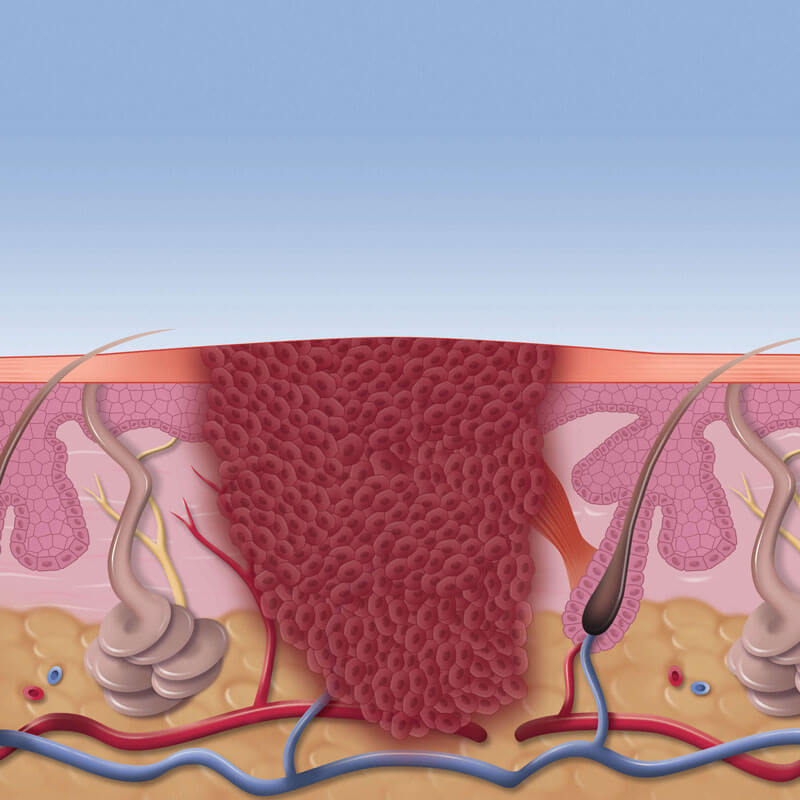
Infected Tissue
Infected tissue can exist several millimetres below the surface and can often be difficult to treat using traditional methods of verruca treatment, resulting in either untreated tissue or significant damage.
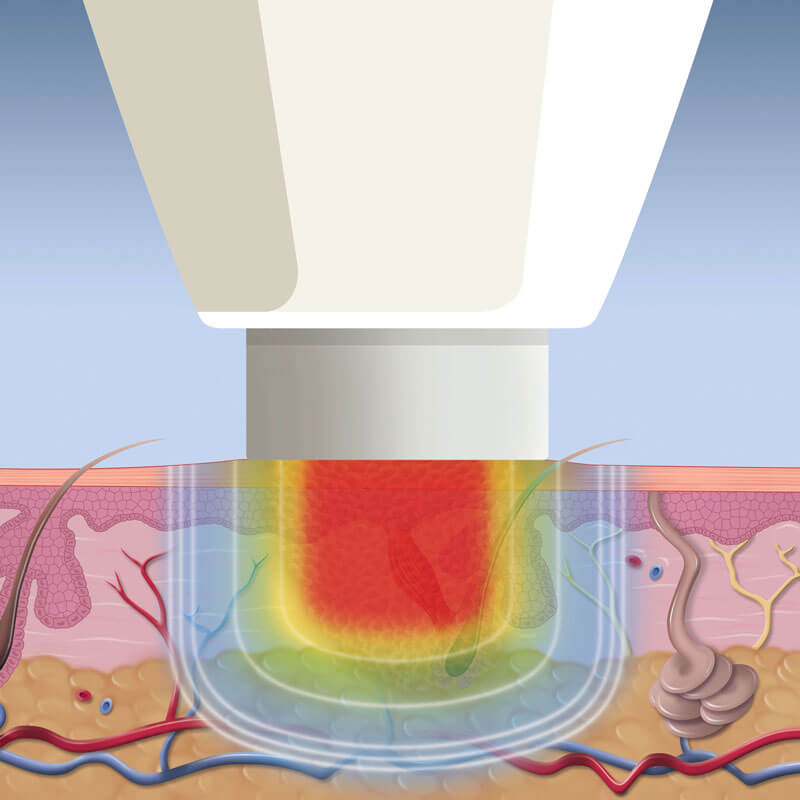
Precise & Highly Controlled
Swift delivers a precise, highly controlled energy dose. As microwaves travel into the tissue, water molecules begin colliding and creating localised heat energy – quickly treating all infected tissue within a predetermined depth.
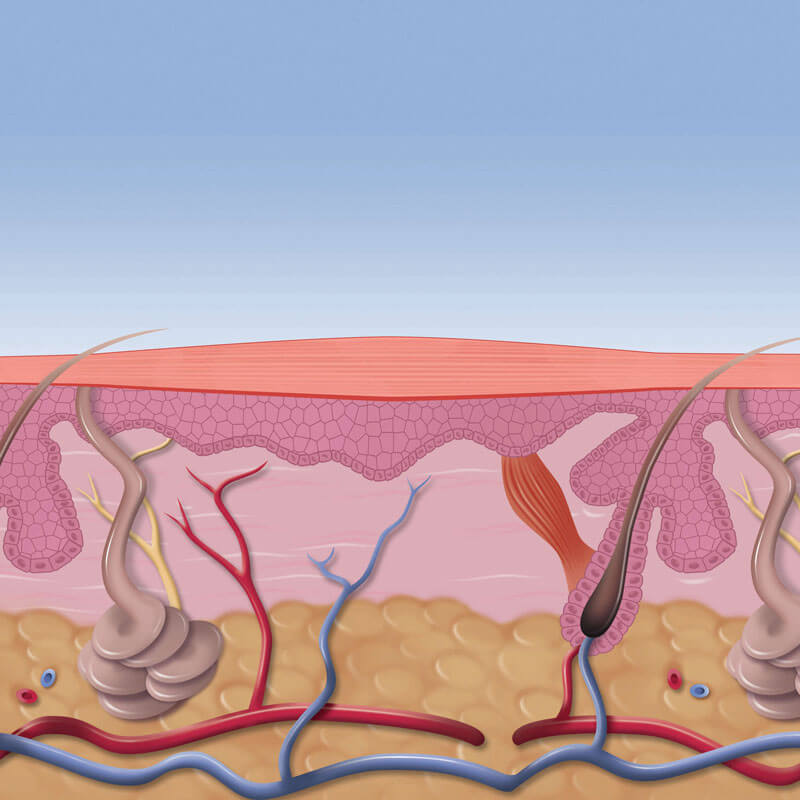
Replaced, Repaired & Regenerated
In just a few seconds the treatment is complete and the healing cascade begins immediately. Treated tissue is quickly replaced, repaired and regenerated.
What does SWIFT involve?
Firstly the podiatrist will use a surgical scalpel reduce any thickened skin over the verruca to ensure a flat surface for the probe to contact with. Following this, the probe is applied to the verruca and microwaves are delivered for two seconds each time, this is repeated five times. Heat is generated in the verruca via microwaves which is focused under the probe to a maximum depth of 5mm.
Precise, localised cell destruction is caused by the rapid increase of temperature in the tissues which is generated by the microwaves.
Who can benefit from SWIFT?
Most people who have had long standing verrucas/warts who want to try one the most effective treatment on the market to treat the lesion. However, there are some contra-indications and precautions that must be taken before opting for Swift, some examples include having:
- A pacemaker
- Poor peripheral circulation
- Neuropathy (loss of protective sensation to the feet)
- People on immunosuppressive drugs
- People with metal pins, plates, or replacement joints around the area of the verruca
- Pregnancy or breastfeeding women (due to fluctuating immune systems)
In addition, this treatment is not appropriate on children under 8, due to the possibility of pain experienced during treatment, and research has shown some verruca clear in children without intervention.
How many treatments are required?
This depends on the individual and how they react to the treatment. Most verruca clear in 3-4 sessions. Occasionally some may need more or less.
How effective is it?
It has been shown that SWIFT has a success rate of 74% following three sessions, and 82% following four sessions, making it one of the most effective treatments available for treating warts and verrucas. However, as with any treatment for verruca there is no 100% guarantee the treatment will resolve the lesion.
Does it hurt?
Everyone has different levels of pain threshold and the sensation varies from person to person. However, like any other treatments for skin lesions, some discomfort is expected. It has been described to feel like a bee sting or a pin-prick sensation which usually lasts 1-2 seconds, this then quickly subsides and disappears. In rare cases, some people may experience minor discomfort or tingling which could last for up to 24hrs before dissipating completely.
There is no need for local anaesthetic, regular dressings and no home treatment is required in between treatments.